

Music at Hooton Pagnell All Saints

School Music Lead: Mrs H. Thorpe
Our Vision and Intent
Music is an important part of life at Hooton Pagnell All Saints, providing pupils with opportunities to express themselves, work creatively and develop confidence through performance. We aim to create an environment where all children feel encouraged to explore music, experiment with sound and experience the enjoyment of making music together.
As a Christian school, music plays an important role in bringing our community together, particularly through collective worship and shared celebrations. Pupils are encouraged to express themselves creatively, listen carefully and show respect for the ideas and contributions of others. Through singing, performing and composing, children develop confidence, collaboration and curiosity while building a lifelong appreciation of music.
At Hooton Pagnell All Saints, pupils are given regular opportunities to sing, listen, compose and perform. Through these experiences, children learn about key musical elements such as pitch, rhythm, tempo and dynamics, while also developing creativity, collaboration and confidence.


Implementation
Music lessons provide pupils with a range of practical and creative experiences.
Lessons typically include:
-
Warm-up activities such as vocal exercises or rhythm practice.
-
Listening to and discussing pieces of music from a variety of genres and cultures.•Learning and practising songs.
-
Exploring musical elements through instruments, body percussion or movement.
-
Opportunities to improvise and compose simple musical pieces.
-
Performing individually or as part of a group.
Lessons are designed to be engaging, interactive and practical, ensuring that pupils actively participate in music-making.
Curriculum Progression and Organisation
Our music curriculum is delivered through the Learning Means The World Curriculum, which allows music to link meaningfully with our wider thematic learning where appropriate, while also providing dedicated opportunities to focus on developing musical knowledge and skills.
The curriculum is organised on a two-year rolling cycle, ensuring that pupils in mixed-age classes access a broad and progressive programme without unnecessary repetition.
Across the cycle, pupils develop skills in the key areas of:
-
Performing – singing and playing instruments with increasing control and confidence.
-
Listening and appraising – exploring different styles of music and discussing musical features.
-
Composing and improvising – creating and developing their own musical ideas.
-
Understanding musical elements – including rhythm, pitch, tempo, dynamics and structure.
Pupils experience a variety of musical genres and cultural traditions, helping them develop an appreciation of music from around the world. Skills are revisited and developed in increasingly challenging contexts so that pupils build confidence and musical understanding over time.
Adaptations
Music teaching is inclusive and adapted so that all pupils can participate and enjoy success.
Adaptations may include:
-
Using visual cues, actions and modelling to support rhythm and pitch.
-
Providing simplified musical patterns or parts for pupils who need additional support.
-
Offering extension opportunities such as composing more complex rhythms or melodies.
-
Encouraging collaborative work so that pupils can support one another during performances and compositions.
Teachers observe and assess pupils’ participation and musical development during lessons to ensure appropriate support and challenge.
Impact
The impact of our music curriculum is seen in pupils who are enthusiastic about music and confident in expressing themselves creatively.
Pupils demonstrate:
-
Increasing confidence in singing, performing and playing instruments.
-
An understanding of key musical elements such as rhythm, pitch and tempo.
-
The ability to listen to and discuss a range of musical styles.
-
Creativity through improvisation and composition.
-
A growing appreciation of music as an important form of cultural expression.
By the time pupils leave our school, they will have experienced a broad range of musical opportunities and developed the confidence, creativity and foundational skills needed to continue their musical learning in the future.
Pupil Voice Statements
-
I thoroughly enjoyed composing, practicing and performing a Roman Battle Soundscape - Ned
-
I enjoyed learning how to play the recorder. Our ‘Hot Cross Buns’ was great! – Thomas
-
I have enjoyed doing extra music lessons and learning how to play guitar - Thomas
-
"I love singing songs - I learn a lot by doing this"
-
"I really enjoyed learning how to play the instruments"
Showcasing Our Music Curriculum


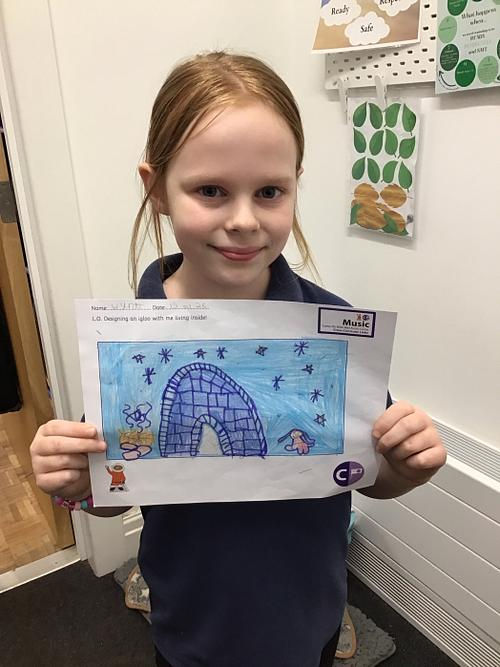
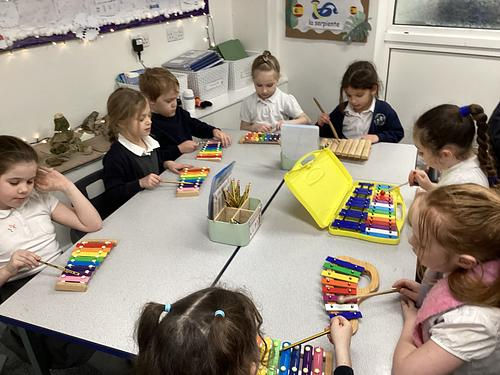
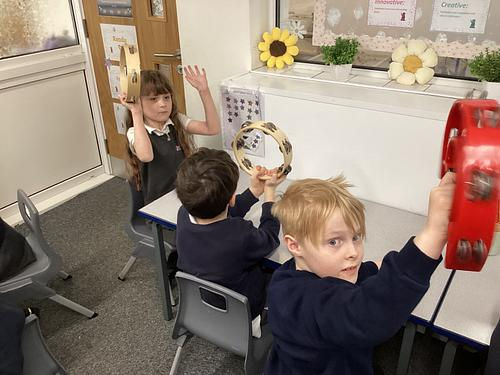


Music
Subject Overview
Music
Knowledge Building
Music
Progression Map
Music
KS1 National Curriculum Coverage
Music
KS2 National Curriculum Coverage