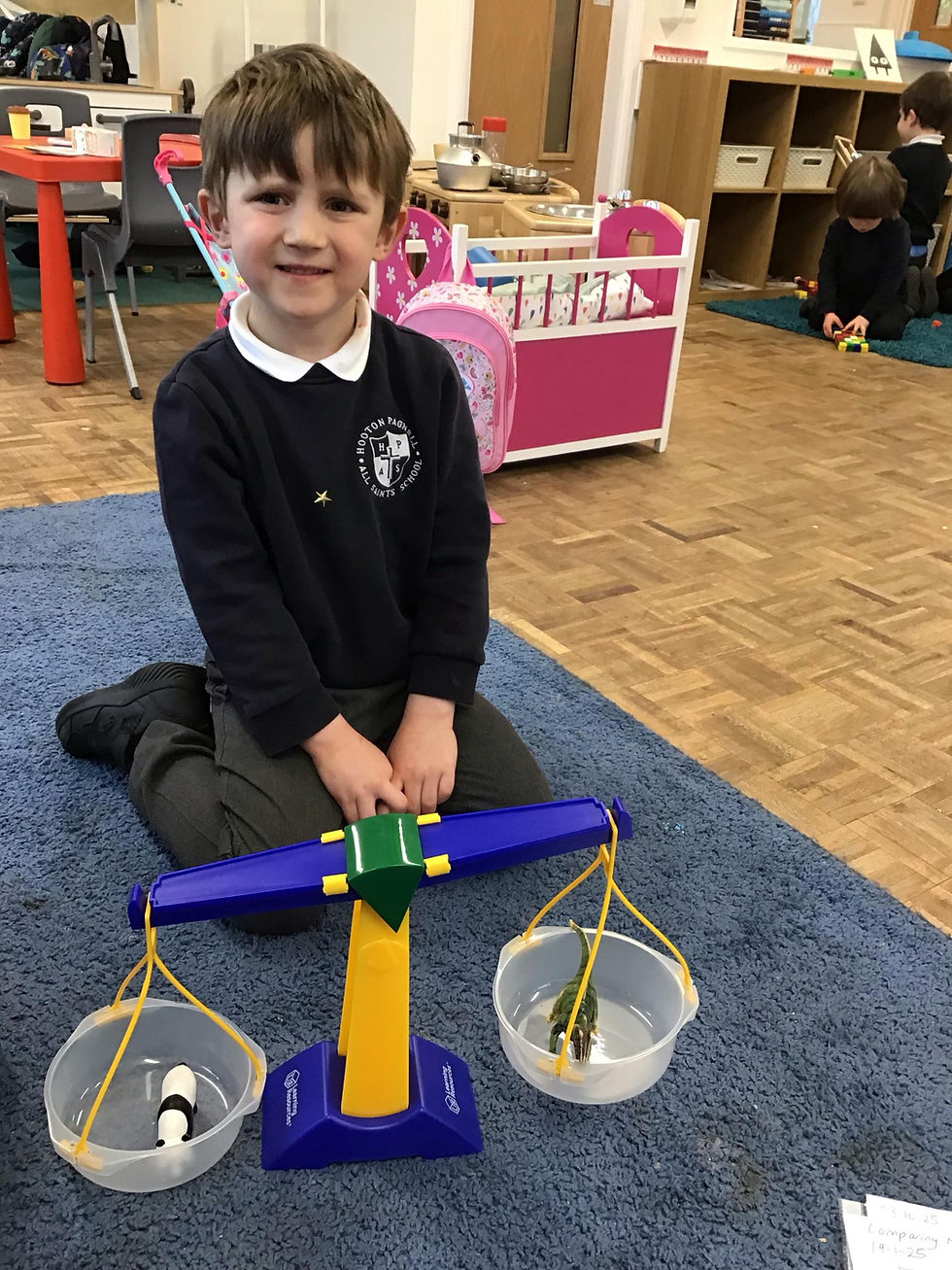
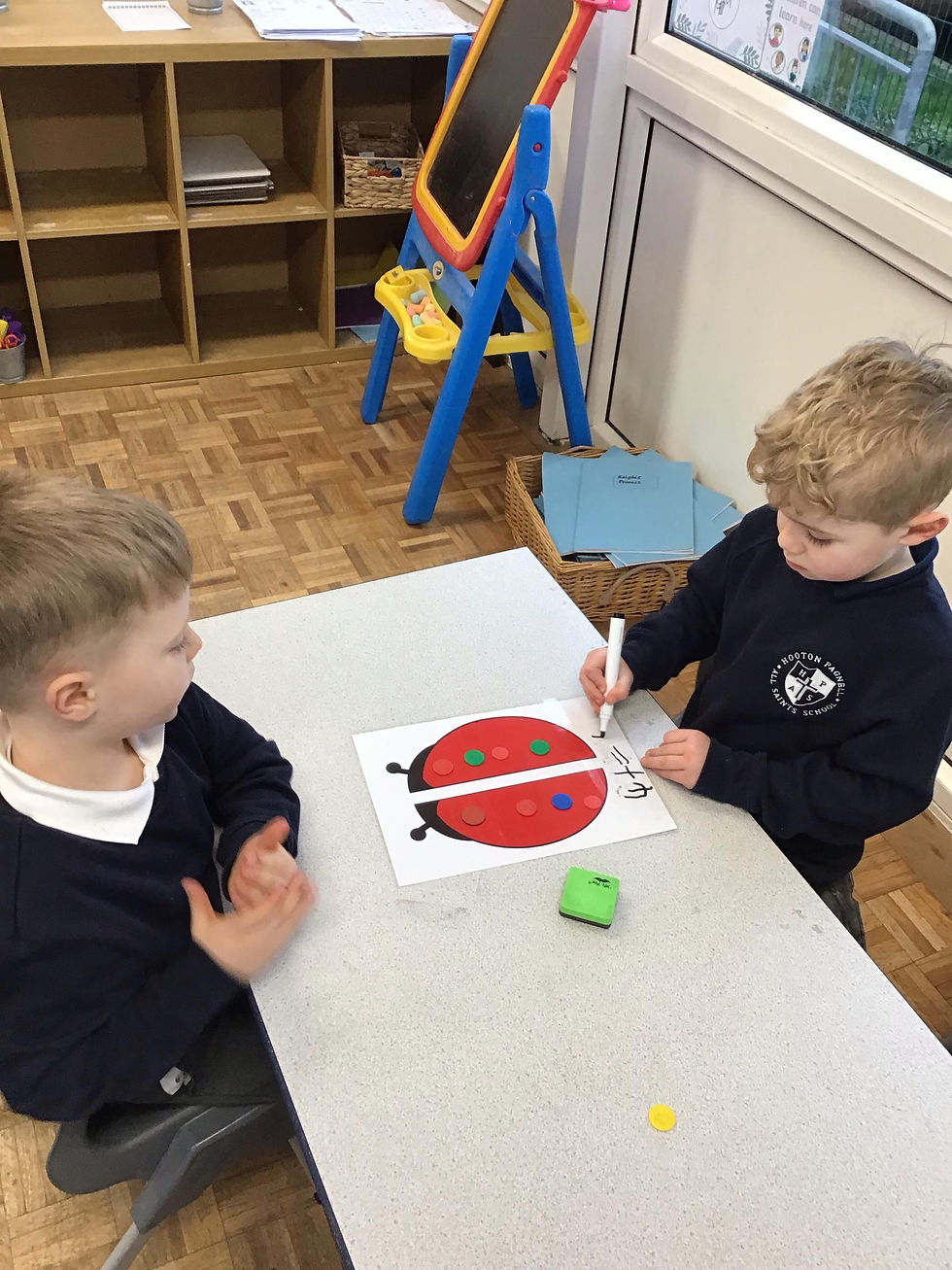
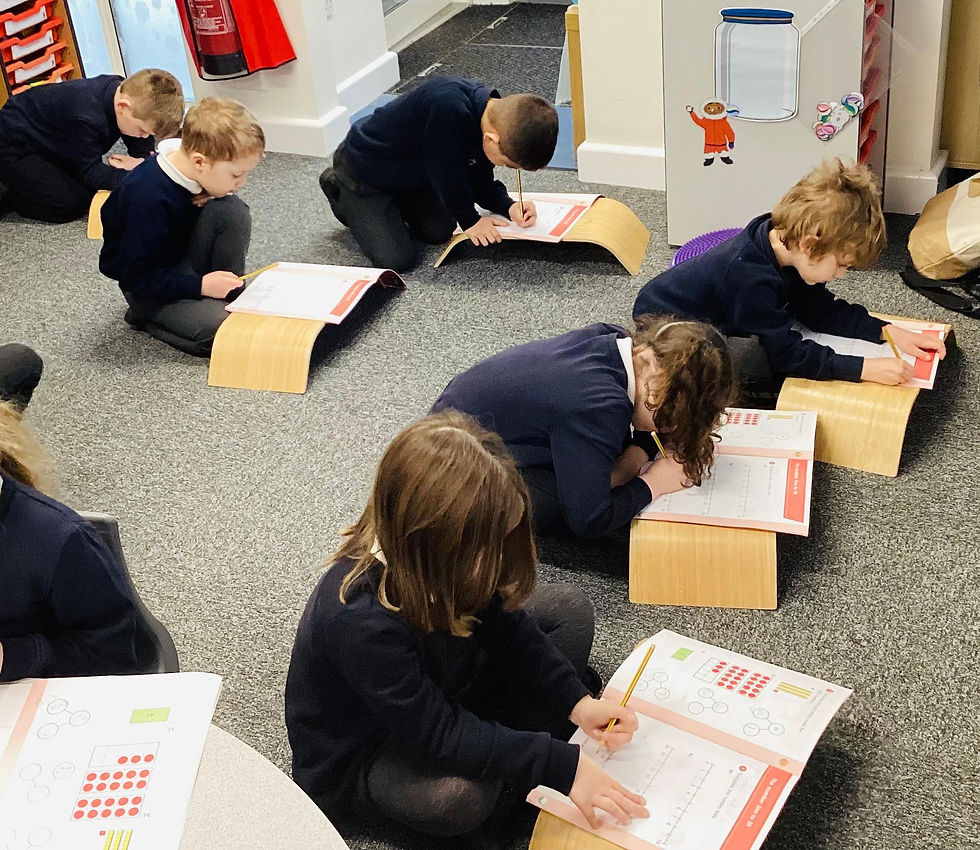
"In mathematics, leaders have established a well sequenced curriculum."
Ofsted, September 2022
"Pupils become fluent in mathematics They eagerly solve problems."
Ofsted, September 2022
Maths at Hooton Pagnell All Saints
Maths Subject Lead: Mrs S. Hall
Our Vision & Intent
At Hooton Pagnell All Saints, our mathematics curriculum nurtures confident, curious and resilient mathematicians from the earliest stages of learning. Using the White Rose Maths Scheme, we follow a structured, mastery-based approach designed to deepen understanding through fluency, reasoning and problem-solving.
Pupils develop their mathematical thinking step by step, building secure foundations that enable them to apply their knowledge to a wide range of situations. Our approach encourages pupils to think carefully, explain their ideas and learn from mistakes, helping them to develop confidence and perseverance in their learning.
As a Christian school, our teaching reflects our values of curiosity, collaboration, respect, faith and independence. Pupils are encouraged to explore mathematical ideas with curiosity, work collaboratively to solve problems and respect the different approaches and thinking of others.
Through this supportive learning environment, pupils develop the independence and confidence needed to tackle challenges and take pride in their achievements.
Implementation
Through our maths curriculum, we aim for pupils to:
-
Develop a secure understanding of key mathematical concepts.
-
Build fluency in calculation and number skills.
-
Reason mathematically and explain their thinking clearly.
-
Solve problems in a variety of contexts.
-
Develop resilience and confidence when tackling mathematical challenges.
Lesson Structure
Maths lessons follow the White Rose Maths sequence for each year group, ensuring that learning builds step by step. Lessons typically include:
-
Revisiting prior learning to strengthen understanding.
-
Introducing new mathematical concepts in small, manageable steps.
-
Modelling strategies and methods clearly.
-
Guided and independent practice to consolidate understanding.
-
Reasoning and problem-solving tasks that encourage pupils to explain their thinking.
Lessons are designed to be interactive and encourage discussion, enabling pupils to explore different methods and approaches.
Curriculum Progression & Organisation
Our maths curriculum is delivered primarily through the White Rose Maths scheme, which provides a carefully sequenced approach to teaching mathematical concepts for each year group. This is supplemented (wherever necessary, dependant on the needs of our children) with high-quality resources from NRICH, NCETM and Oak National Academy to enrich learning, provide challenge and extend reasoning and problem-solving skills.
We ensure that units are taught in a year-specific sequence, so that pupils build on prior learning in a logical progression across all mathematical areas. This approach allows every child to develop a deep understanding of each concept before moving on to the next stage.
Our mathematics curriculum is carefully planned to cover all units designed for each year group. Pupils progress sequentially through key areas of mathematics, including:
-
Number and place value
-
Addition, subtraction, multiplication and division
-
Fractions, decimals and percentages
-
Measurement
-
Geometry
-
Statistics
Throughout school, our pupils use concrete apparatus such as counters, cubes and number lines to develop understanding. They then move to pictorial representations and finally to abstract methods, ensuring mastery at each stage.
Adaptations
Maths lessons are designed to support all learners, recognising that pupils develop mathematical understanding at different rates. Our curriculum is fluid and responsive, allowing pupils to receive instruction at the level that best supports their learning and ensures secure understanding.
For some pupils who are developing their foundational mathematical knowledge, the NCETM Curriculum Prioritisation programme is used to focus on the most important concepts and skills, ensuring that gaps in understanding are addressed and strong foundations are built. For pupils working on smaller steps of progress, the Birmingham Toolkit is used to carefully track and celebrate incremental progress as key mathematical skills develop.
Lessons are carefully adapted to ensure that all pupils can access learning and make progress. Other adaptations may include:
• Using concrete resources and visual models to support understanding.
• Breaking tasks into small, manageable steps.
• Providing scaffolded practice and guided support.
• Offering problem-solving and reasoning tasks to extend learning.
• Encouraging discussion and explanation to consolidate understanding.
This responsive approach ensures that all pupils are supported and challenged appropriately, helping them to develop confidence and independence in mathematics.
Impact
The impact of our mathematics curriculum is evident in pupils who are confident, competent and enthusiastic mathematicians.
Pupils demonstrate:
-
Fluency in key mathematical skills and calculations.
-
The ability to reason mathematically and articulate their thinking.
-
Confidence in problem-solving and applying skills in different contexts.
-
Independence in selecting strategies and methods.
-
Resilience when faced with challenging mathematical concepts.
By the end of each year group, pupils have developed a solid foundation in all areas of mathematics, ensuring they are well-prepared to build on their learning as they progress through school and beyond and can flourish in their futures.
Pupil Voice Statements
-
“I liked learning about negative numbers” – Charlotte, Y5 pupil
-
I enjoy doing work on fractions and I think I am now good at these” -Thomas, Y5 pupil
-
“Every Friday we do arithmetic papers and I have got really good at these” – Ned, Y6 pupil
-
“I love EVERYTHING – Maths is perfect as it is!” – Freddie, Y4 pupil
-
“I enjoy doing Times Table Rockstars and I get really good scores” - Lanson, Y4 pupil
-
"I love Maths, and really enjoy playing on Numbots" - Brodie, Y1 pupill
Showcasing Our Maths Curriculum
Maths
National Curriculum
Maths Coverage at
HP
Maths
Progression Document
Ready to Progress
Links
Maths Vocabulary
Progression